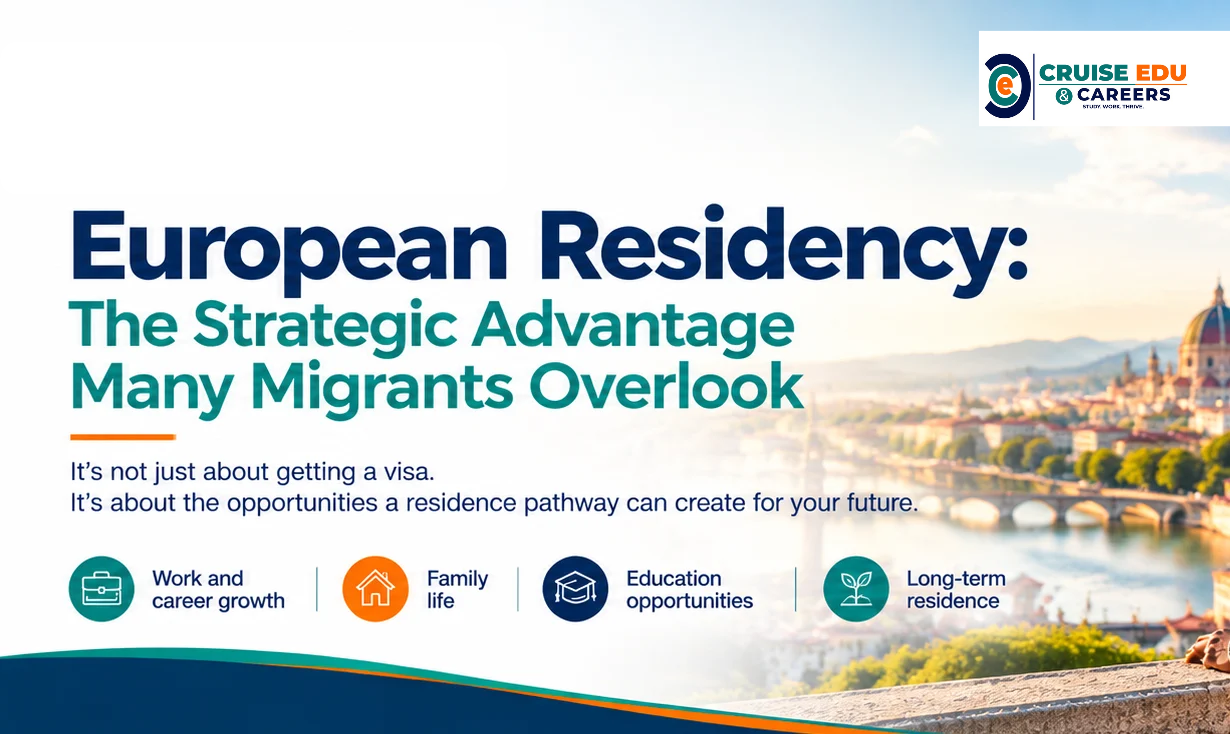
European Residency: The Skilled Worker Advantage
- admin
- October 14, 2026
- European Residency, Residency and Relocation Visa Pathways
- Career Strategy, CEandC, European Residency, Global Mobility, relocation, Work In Europe
- 0 Comments
Moving to Europe doesn’t require a job offer first. Discover the strategic advantage of European Residency. You do not have to get a job offer first, have the employer sponsor your traditional visa and then relocate.
While this path still exists, it places all the leverage in the hands of the employer, subjects you to bureaucratic friction and often ties your legal status to a single company.
Today, the most strategic global professionals are flipping this script. They are decoupling their residency from their employment.
By securing a legal right to reside in Europe before entering the local job market, they transform from “high-risk, high-friction international hires” into “local, ready-to-work talent.” This is the strategic advantage most migrants overlook, and it is the difference between merely surviving a relocation and truly thriving in it.
Many European nations offer employment-independent residency pathways. These permits grant you the legal right to live in the country; and often the right to work, freelance or seek employment – without requiring a company to sponsor you.
When you hold one of these permits, you walk into an interview and can confidently tell the employer: “I already have the legal right to reside and work in this country. You do not need to sponsor my visa.”
Instantly, you are no longer an “international hire.” You are a local candidate.
The “Residency-First” Pathways
Depending on your professional background, financial situation and goals, several strategic pathways allow you to establish residency, as you work towards securing your legal local employment:
1. The Job Seeker / Opportunity Visa
- How it works: Countries like Germany (with its Chancenkarte or Opportunity Card) and Portugal offer specific visas that allow skilled professionals to move to the country for 6 to 12 months expressly to look for work.
- The Advantage: You get a local address, a local phone number and the legal right to attend in-person interviews, network and do trial work days. Once you secure a role, converting this to a full traditional visa is a seamless, internal administrative process.
2. The Digital Nomad / Remote Work Visa
- How it works: If you already have a remote job, freelance clients or a business based outside of Europe, countries like Spain, Portugal, Croatia and Greece will grant you residency based on that foreign income.
- The Advantage: You establish your life in Europe immediately. While these visas are primarily for remote work, many countries allow you to transition to a local employment contract after a year or two, or use the time on the ground to build a local professional network that leads to a sponsored role later.
3. The Freelance / Self-Employed Visa
- How it works: Nations like Germany, the Netherlands and Italy offer visas for individuals who can demonstrate a viable business plan or a roster of freelance clients.
- The Advantage: You are your own sponsor. You control your legal status. If you decide to pivot from freelancing to full-time employment with a local company, you already have the foundational residency in place to make that transition smoothly.
4. The Financial Independence / Passive Income Visa
- How it works: For professionals with substantial savings, rental income or pensions, countries like Portugal (D7 Visa), Spain (Non-Lucrative Visa) and Italy (Elective Residency) grant residency based on your ability to support yourself without working.
- The Advantage: While these specific visas may restrict immediate local employment, they are the ultimate “foot in the door.” They allow you to establish your life, integrate and in some jurisdictions, transition to a work-authorized status after a period of time, or serve as a perfect “Plan B” while you consult or build a business remotely.
The On-the-Ground Advantage
What happens when you execute this strategy and begin your job search from within Europe? The dynamics of your search change entirely.
- Zero Sponsorship Friction: Your resume no longer triggers the “visa required” filter in Applicant Tracking Systems. You bypass the biggest hurdle in international hiring.
- Physical Presence: You have a local address and phone number. You can attend networking events, industry meetups and in-person interviews. You can start a role immediately, without the 3-to-6-month delay of consular processing.
- Stronger Negotiation Power: Because your legal status is not held hostage by a single employer, you can negotiate salary, benefits and role expectations from a position of strength. You are choosing the job; the job is not saving your visa.
The Decision Framework
If you are considering this approach, how do you choose the right country and pathway? Evaluate your options through these three lenses:
- Your Current Income Structure: Do you already have remote income? Consider Digital Nomad visas. Do you have savings or passive income? Consider Financial Independence visas. Are you relying entirely on future local employment? Consider Job Seeker visas.
- The Conversion Pathway: Not all residency permits are created equal. Before committing, verify the country’s rules on transitioning from your initial visa to a standard work authorisation or permanent residency. You want a pathway, not a dead end.
- The Market Reality: A Job Seeker visa is only as good as the job market it places you in. If you are a tech professional for instance, Germany or the Netherlands may offer a faster conversion to employment than a country with a smaller tech ecosystem, even if the latter has a slightly easier visa process.
The Bottom Line: Control Your Trajectory
The traditional route forces you to play by someone else’s rules, on their timeline, with your legal security hanging in the balance.
The “residency-first” strategy is about taking ownership of your global mobility. It is about recognising that your right to live in a dynamic, stable and innovative region like Europe is an asset you can secure independently. By establishing your legal footprint first, you transform the daunting prospect of international relocation into a calculated, empowered career move.
Europe offers many opportunities, but the abundance of choice requires a clear strategy. The goal is not just to find a job abroad, but to build a sustainable, optimised life on your own terms.
At CE&C, we believe that navigating the complexities of global mobility shouldn’t be a guessing game. We provide the strategic insights, clear frameworks and objective analysis needed to help professionals and families design and execute their optimal European residency strategy.
CE&C – Citizenship, Residency & Global Mobility Advisory: Strategic insights for your global journey.